




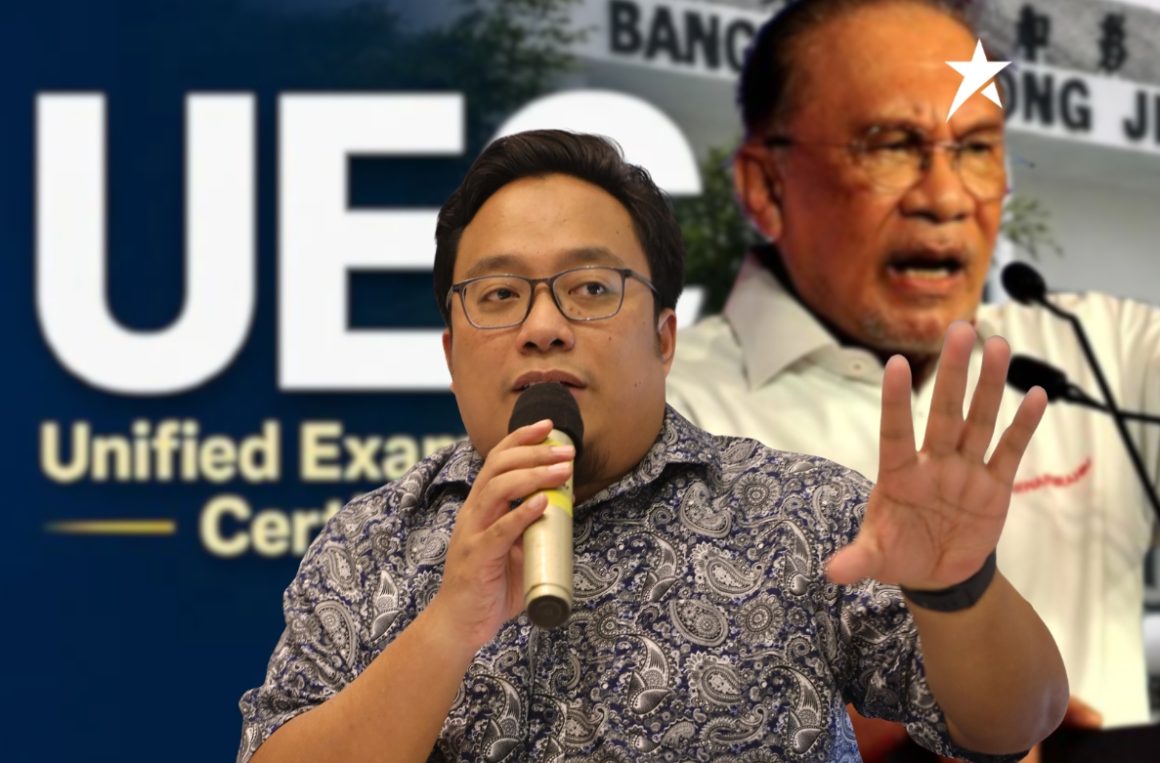
KUALA LUMPUR, June 9, 2026 — BERJASA Vice President Afif Badhrulhisham has argued that the debate surrounding the Unified Examination Certificate (UEC) should not be viewed solely through the lens of university admissions, but rather as a broader issue concerning national integration and the long-term cohesion of Malaysian society.
His remarks came following Prime Minister Anwar Ibrahim’s latest statement expressing support for providing a pathway for UEC holders to enter public universities, subject to certain conditions, including passing Bahasa Melayu and History at the SPM level.
According to Afif, discussions on UEC have often focused on academic qualifications and access to higher education while overlooking the wider implications for nation-building.
“UEC is not just a university entrance examination issue. It is fundamentally about national integration. The real question is what kind of society we want to build for future generations,” he said in a statement.
A Unified Education System Is the Strongest Foundation for Unity
Afif said lasting national unity cannot be achieved if Malaysians are educated in separate streams.
He said a unified education system would reduce the need for mechanisms such as the National Harmony Commission.
Versi ringkas bawah 20 perkataan:
“A unified education system centred on Bahasa Malaysia would reduce the need for new unity-related bodies,” he said.
He said genuine social cohesion is built through daily interaction, shared experiences and a common language during formative years.
Bahasa Malaysia Must Be the Lingua Franca of School Life
Afif said passing Bahasa Melayu in SPM alone is insufficient to achieve meaningful national integration.
Versi ringkas bawah 20 perkataan:
“Bahasa Melayu must be the lingua franca of students as they learn, socialise and grow up together,” he said.
He said language is a shared cultural platform that fosters mutual understanding and a stronger national identity.
Cultural and Religious Education Can Remain as Complementary Components
Afif stressed that a unified national education framework does not require the elimination of cultural, linguistic or religious learning.
He said Chinese, Tamil, Tahfiz and other specialised subjects could remain as supplements within a common national education system.
“Chinese language, Tahfiz and other specialised subjects can complement a unified education system for all Malaysians,” he said.
He said such an approach would preserve cultural diversity while ensuring a shared educational foundation for all Malaysians.
“Only then can we build a harmonious multi-ethnic generation grounded in shared experiences, familiarity and a common language“, he added.
UEC Debate Returns to the National Spotlight
The issue resurfaced after Anwar indicated support for admitting UEC graduates into public universities, subject to specific conditions.
The Prime Minister said the move would not undermine Bahasa Melayu’s status and would retain core national subject requirements.
The proposal has reignited debate over Chinese independent schools, UEC recognition and Malaysia’s education system.
Critics Warn Against Further Educational Segregation
Critics argue that expanding UEC recognition could further entrench parallel education systems and hinder national integration.
They say policymakers must consider long-term social impacts of maintaining separate educational pathways that limit interaction among different groups.
For Afif, the central issue extends beyond academic qualifications.
“He said the debate is not about UEC graduates’ capability, but about whether Malaysia is committed to a shared education system or continued separation”, he said.