



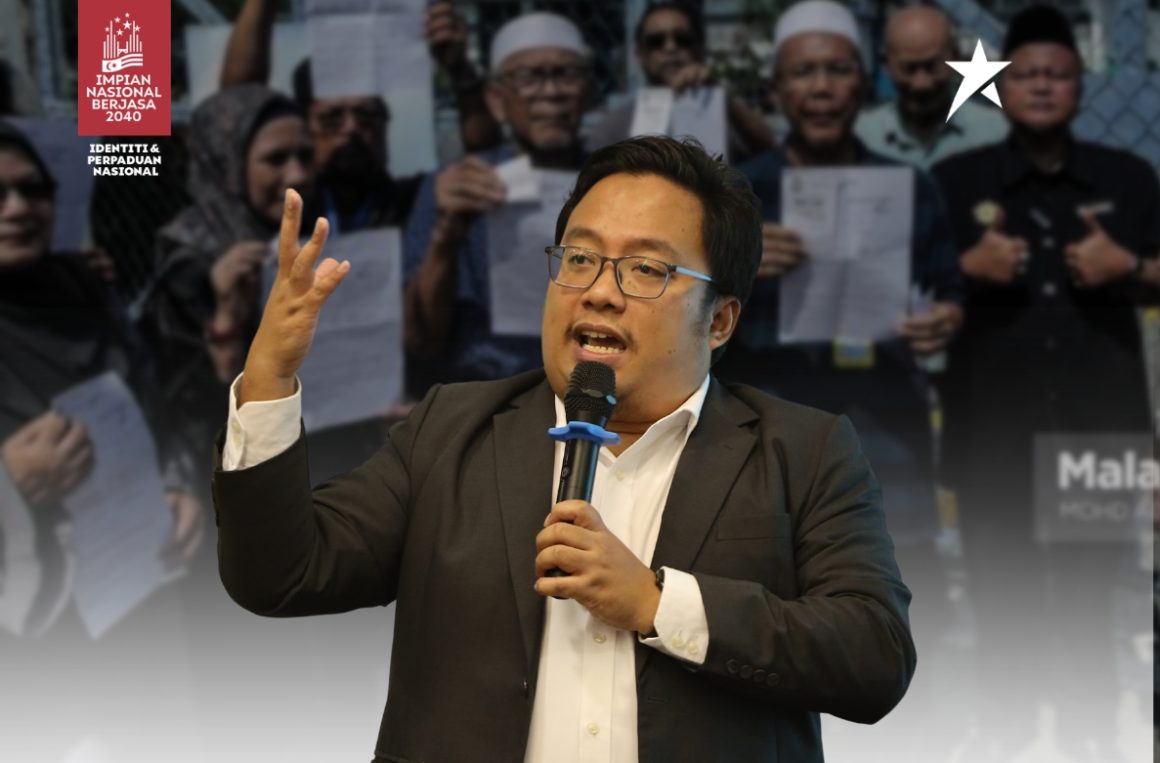
KUALA LUMPUR: BERJASA vice-president Afif Badhrulhisham said the Surau Taman Seraya controversy reflects deeper failures in national integration, civic education, and understanding of Malaysia’s constitutional framework.
Afif said police identified the suspect as acting alone, but urged public not to treat it as an isolated dispute.
The issue erupted after Surau Taman Seraya lodged police reports against a resident allegedly objecting to azan and Friday prayers.
According to Afif, the matter escalated beyond concerns over congestion and entered the realm of constitutional and cultural tensions.
“One does not petition against a house of worship simply because of traffic inconvenience. It reflects a deeper failure to understand the role of Islam within Malaysia’s constitutional and national identity,” he said.
‘Islam’s position cannot be separated from national identity’
Afif said Article 3(1) establishes Islam as Malaysia’s religion, a foundational rather than symbolic constitutional provision.
He argued that the objections to the azan and Friday prayers went beyond concerns over noise or traffic management.
“The azan is not noise pollution. “Friday prayers are not disturbances but part of Islam’s lived expression in this country,” he said.
Afif said the issue reflects weak integration, with many Malaysians lacking understanding of communities, history, and shared values.
“For decades, communities have increasingly lived in parallel social spaces through separate schools, media ecosystems, and residential patterns,” he added.
Calls for practical solutions instead of suppression
At the same time, Afif acknowledged that congestion around mosques and suraus during Friday prayers could cause inconvenience for nearby residents.
He said solutions require coordination between authorities, mosque committees, and residents, not halting religious practices.
He proposed measures such as designated parking areas, traffic marshals, and improved urban planning to reduce disruption during Friday congregations.
“The solution is traffic management, not religious suppression,” he said.
Afif said the azan reflects Malaysia’s identity, noting tourists often find it a memorable national experience.
Critics warn against inflaming religious tensions
Several critics, however, cautioned against framing the issue in ways that could deepen communal sensitivities.
Siti Kasim said disputes over places of worship should be resolved through dialogue and mediation, not public escalation.
Political analyst James Chin warned religious controversies in Malaysia are often politicised, risking further polarisation if handled emotionally.
Others said framing the azan issue as a civilisational conflict could hinder practical engagement between residents and surau management.
Police are currently investigating the case under Section 4(1) of the Sedition Act 1948, Section 298 of the Penal Code, and Section 233 of the Communications and Multimedia Act 1998.