




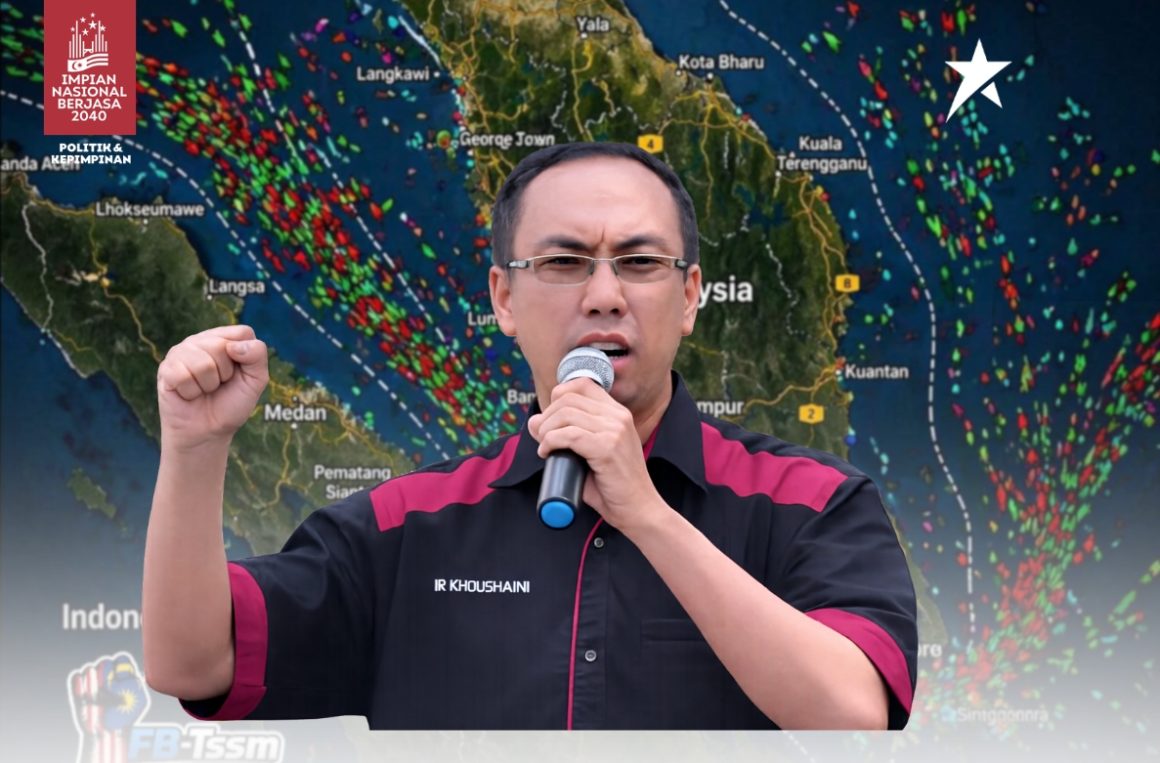
COMMENTARY | Malaysia is well-positioned to play a larger role in shaping the future of the Strait of Malacca, as regional developments bring renewed attention to the strategic waterway.
Khoushaini said the proposal by Indonesia to impose a levy on vessels transiting the strait must be viewed within a broader geopolitical context, given the waterway’s role in carrying about 40% of global trade and nearly 30% of the world’s oil flows.
He noted over 70% of TSS-guided shipping passes near Malaysian waters, placing Malaysia in a strategic position.
Shipping patterns favour Malaysian waters
Khoushaini explained that shipping lanes in the strait are determined by technical factors such as depth, currents, and navigational safety.
He said Malaysian waters are deeper and more stable than off Sumatra, making them ideal for large vessels like supertankers and container ships.
“This has resulted in global shipping traffic concentrating along corridors nearer to Malaysia, reinforcing its importance in maritime monitoring and security,” he said.
Balancing law and strategic interests
Khoushaini stressed that Transit Passage governs the strait and guarantees freedom of navigation despite Malaysia’s geographic advantage.
He warned that any unilateral levy could trigger tensions with major user states such as China, Japan, and Western economies.
“Malaysia must adopt a balanced approach which is defending open navigation while safeguarding its strategic interests,” he said.
Risk of traffic diversion
Khoushaini cautioned that changes affecting shipping costs or regulations could influence vessel routes in the region.
He said alternative routes such as the Lombok Strait may become more attractive if conditions in the Malacca Strait change significantly.
“If traffic shifts, it could weaken Malaysia’s ports and its broader economic standing,” he added.
Turning advantage into national strength
Khoushaini affirmed that Malaysia’s geographic position provides significant economic and geopolitical leverage, particularly in strengthening maritime security, monitoring capabilities, and logistics development.
However, he emphasised that without a clear and assertive policy framework, this advantage may remain underutilised.
“Malaysia must strengthen its national maritime strategy, integrating security, diplomacy, and world-class logistics development,” he said.
He added that the country must remain committed to upholding open navigation while maximising national benefit.
“Only through strategic clarity and policy courage can Malaysia transform its geographic advantage into real national power,” he said.